Obesitaskliniek Dendermonde — AZ Sint-Blasius
After surgery
Lifestyle adjustments
Lifestyle guidelines
After a weight-loss operation, it is very important to adjust your lifestyle and not fall back into the unhealthy habits from before the procedure. To achieve the best result, it is very important that you adhere to the new lifestyle guidelines. At Obesity Clinic Dendermonde we have developed a care pathway for this, in which you are intensively guided by various disciplines. During the first year, a check-up with the surgeon or endocrinologist is scheduled every three months. In addition, you are followed up by our dietitian and psychologist and you will exercise under the guidance of a physiotherapist. After the first year, the frequency of the check-ups will decrease but we will still follow you up several times a year. Various studies show that patients who are intensively followed up achieve the best result and also maintain it in the long term!
The care pathway is based on 3 pillars: nutrition, exercise and mental and social well-being.
Nutrition
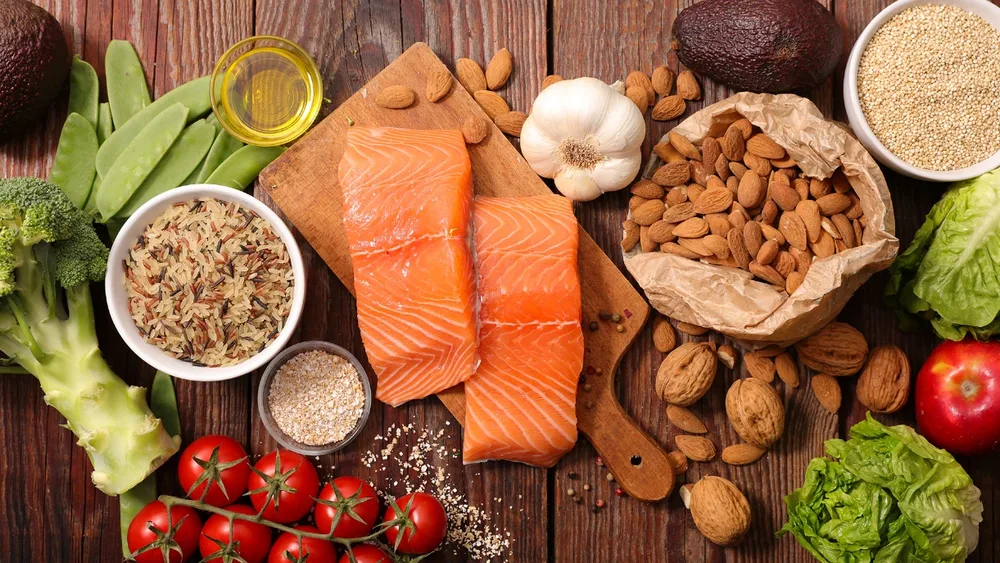
Lifelong guidelines after a bariatric procedure
- Check the nutritional value of all products you buy!
- Liquids must not contain sugar (carbohydrates of which sugars must never be above 0% or 0 g/100 g).
- Solid food: carbohydrates of which sugars must never be above 5% or 5 g/100 g.
- Limit carbohydrates: first eat the proteins such as meat, fish, cheese, eggs and the vegetables. If you are still hungry after that, you may eat some carbohydrates (potatoes, rice, pasta, bread, etc.).
- You may eat all types of fresh fruit. A maximum of 2 pieces of fruit per day. (In the case of grapes, strawberries, berries, etc., you may consider a small handful as 1 piece of fruit.) Canned fruit (without sugar or syrup) is also allowed.
- Fruit juice (including freshly squeezed), jam, fruit purée, compote and smoothies are forbidden as these naturally contain large amounts of sugar.
- Eat a portion of full-fat yoghurt daily. This is good for the intestinal flora and ensures that you get enough protein.
- Limit alcohol to a maximum of 1 unit per day. Excessive alcohol consumption after a bariatric procedure can cause serious damage to the liver.
- Never drink ordinary soft drinks! You may drink light and zero soft drinks. However, be careful as some of these drinks do contain sugar (so always check the packaging; carbohydrates of which sugars must never be above 0% or 0 g/100 g!).
- You may use products with sweeteners (aspartame) and/or natural sugars (stevia, tagatesse, tagatose).
- Be careful with 'light' or so-called fat-free food. This often contains less fat but does have added sugars (for example: eat full-fat yoghurt instead of low-fat yoghurt).
- If you notice a sugar shortage (sweating, trembling), eat a banana or a yoghurt. Never take anything with sugar as this can worsen the symptoms!
In addition, it is essential that after certain malabsorptive procedures such as the gastric bypass (Roux-en-Y and mini bypass) and the SADI or duodenal switch, you take vitamin preparations and supplements. These will be prescribed by the treating physician at the consultation.
After the obesity procedure, you are also followed up by our dietitians, whom you can always contact for questions about your diet.
Exercise

Exercising after the operation is very important. But it must be tailored to your weight, physical condition and fitness level. We therefore advise you to do this in the beginning under the guidance of a physiotherapist.
The clinic provides a programme where you can come and exercise twice a week under the guidance of a physiotherapist.
- Physical activity lowers cholesterol and blood pressure. This has a beneficial effect on the heart and blood vessels.
- Physical activity builds muscle mass.
- Physical activity leads to greater calorie burning.
- Physical activity contributes to better mental well-being. You gain more and more self-confidence as you are increasingly able to push your limits.
Mental and social well-being

After an obesity procedure, a lot can change for you and this can sometimes be overwhelming. Social support is then very important.
Obesity Clinic Dendermonde provides psychological support both before and after the operation for patients who need it. During the preliminary process and throughout the post-operative follow-up, you can indicate at any time that you wish to make use of this.
Pregnancy and the pill
Oral contraception: After a weight-loss operation (gastric bypass, SADI, DS type), the reliability of the pill (oral contraception) can no longer be guaranteed. The active ingredients are sometimes absorbed less well after the operation. Fertility, on the other hand, may actually increase, which means you can become pregnant more quickly. It is therefore very important that, before a weight-loss operation, together with your gynaecologist, you look for an alternative contraceptive (IUD, contraceptive injection, etc.).
Pregnancy: After a weight-loss operation it is better not to become pregnant during the first 18 months. Once this period has passed, there is no longer any objection to becoming pregnant. Good follow-up by the gynaecologist is very important after an obesity operation. Therefore, inform your gynaecologist early during the pregnancy that you have undergone a weight-loss operation.